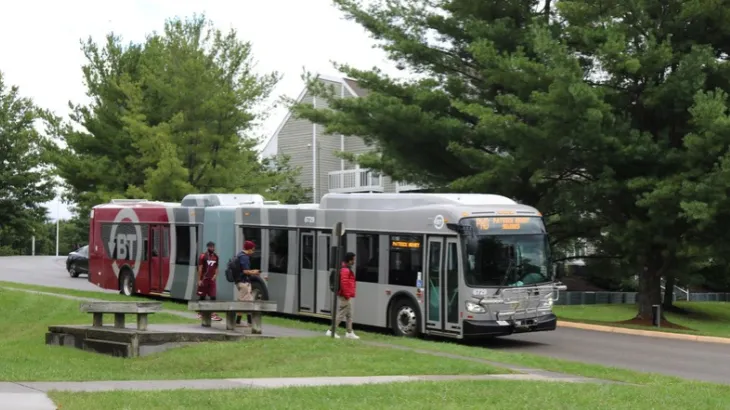
TCAT faces challenges in fleet electrifications, purchases diesel buses as replacement
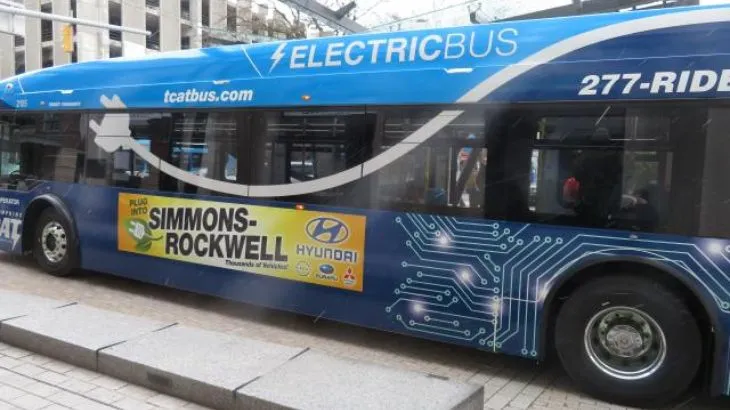 Image credit: Gillig
Tompkins Consolidated Area Transit (TCAT), Ithaca, NY, board of directors voted to purchase five new diesel “replacement” buses after the agency paused services on seven electric buses because of reliability concerns, mechanical issues, parts shortages and inconsistent service.
The electric buses were pulled on Wednesday, March 13 following mechanics’ discovery of the frame of one of the buses separating from the axle while it was on a lift. This rendered the buses “unfit for service” and they are now sitting idle in the TCAT garage. There has not yet been a decision about when or if any of the Proterra buses will return to service.
The five new diesel buses will be purchased from the company Gillig at a cost nearly half as much as the electric buses, at about $517,000 each. The replacement buses will be funded by the state’s Modernization Enhancement and Accelerated Transit Capital programs.
Buses from Gillig will have lower-emission standards and will be more sustainable than earlier models of diesel buses. TCAT says the buses will take a year to be manufactured, but there is a chance they will come sooner if TCAT’s order is fulfilled alongside a larger transit agency’s order that is buying hundreds of buses at a time.
The electric buses, purchased in 2021 from electric bus company Proterra, which filed for bankruptcy just two years after the buses were purchased, originally cost about $1 million each. As a result of the bankruptcy filing, Proterra’s transit line was sold to Phoenix Motor in January. Since the electric buses launched, the parts shortage for their slew of mechanical issues caused most of them to regularly be out of service. The buses were paid for by a variety of sources, including federal, state and local funders. Local funders included the city of Ithaca, Tompkins County and Cornell University.
Currently, TCAT has a fleet of 53 buses so the seven electric buses made up 13% of their fleet. The electric buses were mostly used on routes that went through Cornell, as they are typically shorter distances to accommodate the battery life of electric buses.
The purchase of new diesel buses goes against TCAT’s 2018-2030 strategic plan, which aimed to have all electric transit vehicles by 2035. Now, six years and $7 million later, the fleet of buses is still entirely diesel powered. TCAT says this will not be a permanent solution; it will only delay their original 2035 goal by “a few years”. Unfortunately, this means TCAT can’t seek more funding for replacing their diesel buses until 2036. Facing declining ridership, service cuts and driver shortages, TCAT board members cite restoring service and rebuilding readership as a first priority, above their sustainable fleet goals.
TCAT explained that they are “still on track” to purchase seven more electric buses through the federal Low-No Grant Program, hoping to have the buses by 2026. The electric buses from Gillig are expected to cost $988,311, which is just over the previous $954,000 buses from Proterra, but expected to provide increased reliability. When compared to diesel buses, lifespan is somewhat similar, although the electric buses cost much more.
Source: Gillig