Greater Dayton RTA using Masabi AI tool to accelerate transit analysis
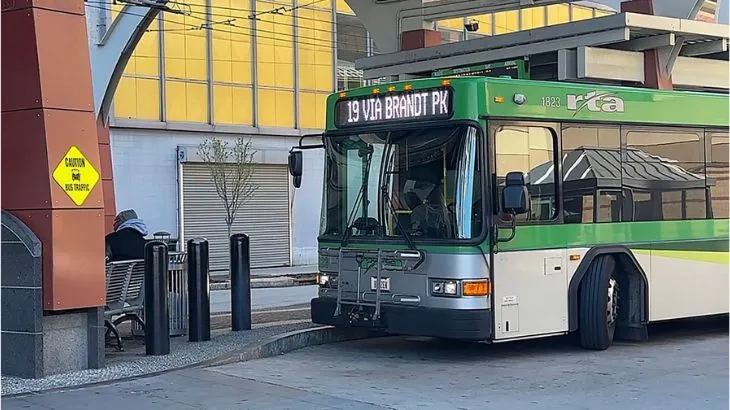 Image credit: RTA
The Greater Dayton Regional Transit Authority (RTA) is using an AI-powered tool to speed up their transit analysis. Within five minutes, the tool accurately told RTA which routes riders transferred from to reach key commuter routes, a process which usually requires significant manual labor.
“The technology allows agency employees to ask questions about ridership, ticketing and fare-validation data without relying on specialist analysts or complex reporting tools. Dayton is also examining route ridership and fare-media usage to support its ongoing network redesign, although testing remains focused on accuracy rather than quantifying productivity gains,” William Thorpe writes for Cities Today.
The new technology is part of a new AI incubator, which is testing how AI can be used to improve data analytics, revenue protection, fare system management and more for transit agencies. The RTA is testing the natural language tool developed by fare collection technology provider Masabi, as part of a wider initiative involving four transit agencies exploring AI applications for public transport.
Brian Zanghi, CEO of Masabi noted “Last year, their planning team asked which routes riders were transferring from to reach a couple of key commuter routes, as working that out manually using their existing reporting tools took a significant amount of time,” Brian Zanghi, CEO of Masabi, told Cities Today. “With the natural-language tool, the same analysis took five minutes and the results matched what they’d found before.”
The technology allows agency employees to ask questions about ridership, ticketing and fare-validation data without relying on specialist analysts or complex reporting tools. Dayton is also examining route ridership and fare media usage to support its ongoing network redesign, although testing remains focused on accuracy rather than quantifying productivity gains.
The project forms part of a new AI incubator established following more than a year of research with transit agencies across North America and Europe. Its six areas of exploration include data analytics, customer service, revenue protection, back-office automation, fare-system management and AI-enabled ticket purchasing.
Another US agency is testing the analytics tool, while two large transit authorities have examined six months of ticketing and validation data to identify potential revenue losses. The research is investigating whether machine learning can identify suspicious transaction patterns that conventional rules-based systems might overlook, with safeguards intended to prevent passengers being unfairly targeted.
“No demographic, personal or identifiable information about riders is shared with the AI models, so they have no way of knowing who a passenger is,” Zanghi said. “The first step for anything a system flags is a prompt for a person to review, keeping humans in the loop and agencies in control of how any insight is used.”
Self service analytics is considered the leading candidate for wider deployment, with work underway to expand the available data and improve the interface. Looking further ahead, researchers are exploring how passengers might plan journeys and purchase tickets directly through AI assistants.
“It’s easy to imagine someone asking an assistant to plan their day including travel, and being offered the right ticket as part of the answer,” Zanghi said. “We think public transit should be ready for, and benefit from, that shift rather than reacting to it later.”
Source: Greater Dayton RTA