Blacksburg Transit facility gets nearly 1,500 solar panels at no upfront cost
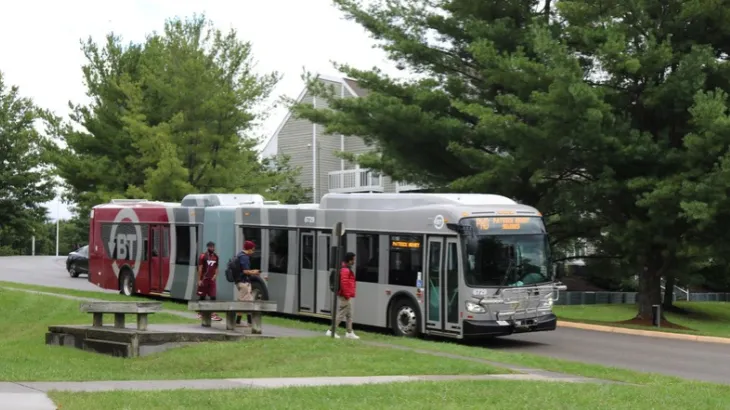 Image credit: BT
A 1,469-panel, 866.71-kilowatt solar array is being installed on the roof of the Blacksburg Transit facility. The project will cut energy costs immediately and save millions of dollars over the life of the agreement.
The town of Blacksburg entered a 25-year power purchase agreement with Secure Solar Futures to fund the project at no upfront cost to taxpayers. The installation is being carried out by Baseline Solar, a locally-owned company founded in Blacksburg. Under the deal, the town leases the roof to Secure Solar Futures for $1 a year, then pays the developer for the energy the panels produce — at a rate lower than what the town currently pays its utility provider.
“We lease them the roof for a dollar a year, and then we pay them for the energy output,” said Carol Davis, Blacksburg’s sustainability manager. “The solar developer gets ongoing revenue from the power that we’re paying them for. But the best part is, we, on day one, start paying a lower utility rate or a lower rate for that energy than we’re currently paying the utility.”
The new rate is fixed at 11.35 cents per kilowatt — roughly 12 percent less than the town currently pays — and will not change over the contract period. “We are locking in a low rate of 11.35 cents per kilowatt, and that will stay the same over the contractual period while utility rates continue to rise,” Davis said. “So, the savings is only going to accelerate over time.”
Over the initial 25-year term, the town expects to save approximately $2.2 million in avoided energy costs. Blacksburg also holds an option to extend the agreement by two five-year terms, bringing the total potential contract length to 35 years. If both extensions are exercised, projected savings climb to $4.4 million.
Davis said the town had been evaluating the transit facility for some time before the financial conditions made the project feasible. “We’ve been looking at this facility for quite a while, but the economics didn’t line up until recently,” she said. “There’s a particular contractual agreement called a power purchase agreement that wasn’t possible in Virginia until a couple of years ago. And we started to look at the facilities that might be a good fit. Blacksburg Transit has a very large, very flat roof. It was an ideal candidate for this.”
Once installed, the 866.71-kilowatt system is expected to offset more than 100 percent of the transit facility’s current energy needs. The transit system provided nearly five million rides in 2025, one of the highest ridership totals in Virginia.
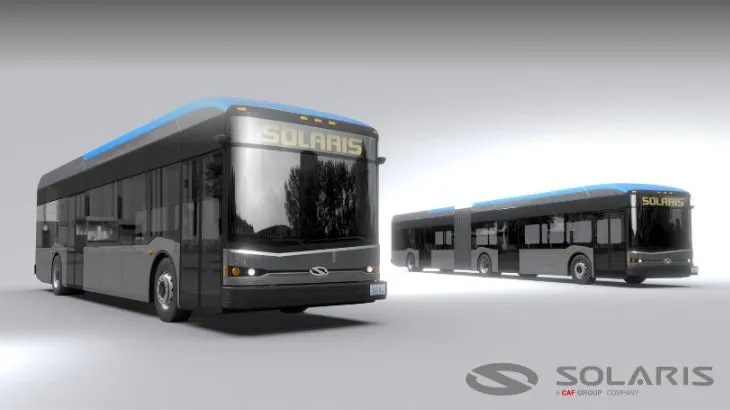
Blacksburg Transit is in the process of converting its bus fleet from gas-powered to electric. As of now, 28 of the town’s 53 buses are electric, putting the conversion about halfway through its goal. The current target for completing the full transition is 2032, though Davis noted potential supply issues could push that timeline. When the fleet conversion is complete, the solar array is expected to offset approximately 90 percent of the facility’s energy needs — accounting for the higher electricity demand that comes with charging an all-electric fleet.
Davis said the expiration of a federal tax credit for solar projects made this a “now or never” situation. “It was kind of a now or never moment,” she said. “We really had to do it while that federal tax credit was sunsetting and so we had to quickly assess which of our buildings was the most suitable and we would have done more if we could, but there were other factors at play why other buildings weren’t as ready as this one.”
The town is continuing to look at solar potential at other facilities, as well as opportunities to improve energy efficiency across its buildings and fleet. However, she acknowledged uncertainty about future incentive programs. “We’re not sure what that policy and regulatory landscape will look like, but we’re hoping something else comes along,” she said.
Davis said installation of the 1,469 panels is expected to be complete by Halloween. After that, the system must go through utility inspection and interconnection steps before it goes live. “I think at the latest we anticipate that this project will be operational by the end of this year,” Davis said.
Source: BT