Ballard FCmove-SC fuel cell engine to premier in Solaris Urbino 12 hydrogen bus
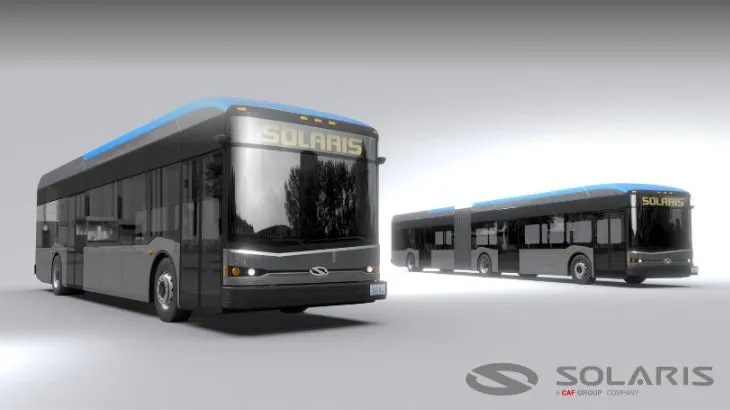 Image credit: Solaris
Ballard Power Systems (Ballard) revealed that its FCmove®-SC fuel cell engine will make its debut in the new Solaris Urbino 12 hydrogen transit bus. This move comes based on the companies’ long-term supply agreement, broadening the scope of cooperation and reflecting what the pair calls a continued commitment to advancing hydrogen bus technology.
Designed for city transit duty cycles, the FCmove-SC combines what Ballard describes as efficient power generation with an architecture designed to be compact that works to simplify vehicle integration and servicing when in operation. Ballard says its design draws on its operating experience to help manufacturers and operators improve performance and reduce lifecycle costs.
“The FCmove-SC’s first integration into series production brings our latest fuel cell technology into Solaris’s new bus platform designed around everyday operational needs,” said Ballard Chief Revenue Officer Oben Uluc. “For manufacturers, that means simpler integration and greater design flexibility. For operators, it means efficiency, serviceability and long-term value—making hydrogen buses an increasingly competitive option for zero-emission public transport.”
The new-generation Solaris Urbino 12 hydrogen is built on the unified platform shared by the latest Urbino buses. Ballard notes that removing the conventional engine tower creates space for additional rear seating while the flexible positioning of roof-mounted components improves service access.
The fuel cell serves as the bus’s primary energy source, generating electricity for a centrally mounted traction motor. A supporting traction battery supplies additional power during peak demand and stores energy recovered through regenerative braking. The FCmove-SC introduces several improvements for bus manufacturers and operators:
- More power in a compact package: A 57 percent increase in volumetric power density through integrated DC/DC packaging.
- Simpler vehicle integration: An internal DC/DC converter and power controller reduce external interfaces and consolidate functionality.
- Improved thermal management: Maximum radiator outlet temperature increases from 60°C to 75°C, supporting reduced cooling requirements and greater use of waste heat for cabin heating.
- Easier servicing: A 40 percent reduction in total part count simplifies the system and helps reduce maintenance requirements.
- Enhanced safety: Revised internal stack-enclosure geometry provides passive protection against hydrogen-related risks.
The FCmove-SC delivers up to 80 kilowatts of rated power and 57 percent peak efficiency, with a specified lifetime exceeding 25,000 operating hours. It also supports freeze-start operation down to −30°C and remote diagnostics to help identify maintenance needs.
Source: Ballard