DOE launches Microbattery Design Prize for small-capacity battery in sensor systems
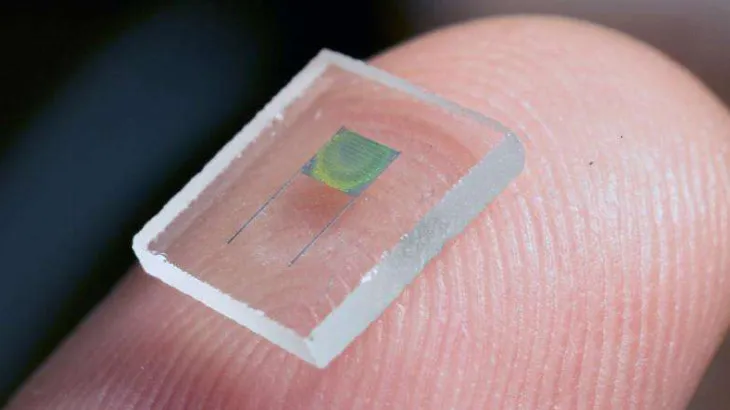 Image credit: Clean Technica
The U.S. Department of Energy (DOE) has launched the Microbattery Design and Commercialization Prize, a two-stage competition to award up to $1.1 million in federal funding as well as performance and safety testing services with DOE national laboratories to innovative small-capacity battery design projects that will improve performance, safety, and recyclability.
Phase 1 - Idea: During Phase 1, competitors will develop and submit technical designs and schematics for microbatteries that serve a specific application (like a grid monitoring devices) and meet certain performance goals (like a specific storage capacity, cycle lifetime, safety, or recyclability) that go beyond what is commercially available today.
Phase 2 - Test: During Phase 2, competitors will create prototypes to submit to DOE national labs for performance and safety testing. Competitors will also work to determine potential cost to manufacture their designs at scale. By the end of this contest, participants will develop a realistic plan to commercialize and manufacture their technology.
The Microbattery Design Prize is led by DOE’s Office of Energy Efficiency and Renewable Energy’s Advanced Materials and Manufacturing Technologies Office (AMMTO) and managed by the National Renewable Energy Laboratory (NREL).
Applications for Phase 1 are due on July 1, 2023, at 5:00 p.m. ET. DOE anticipates making up to six awards in Phase 1, each consisting of a $75,000 cash prize and performance and safety testing services with DOE National Laboratories.
The purpose of this design prize is to advance innovative designs for microbatteries and accelerate their commercialization and integration into existing technologies like sensor systems for smart manufacturing processes, and grid monitoring of renewable energy.
Because of the requirements associated with their small size, the microbattery market is unable to leverage many of the existing manufacturing processes of the larger battery supply chain ecosystem. This presents a major barrier to the development and commercialization of new microbattery chemistries and designs, along with an opportunity to increase domestic production and secure supply chains.
Source: DOE