Joint Office invests $46 million to enhance EV charging reliability, develop workforce
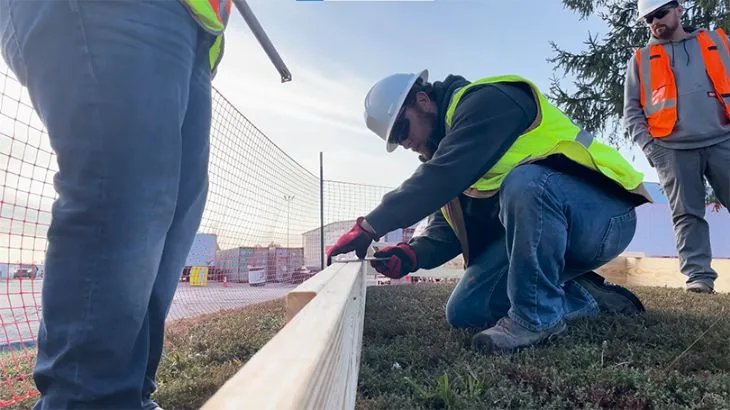 Image credit: Joint Office of Energy and Transportation
The Joint Office of Energy and Transportation (Joint Office) has announced funding of $46.5 million for 30 projects in 16 states and Washington, D.C. to make targeted investments in the following areas:
- EV Charging Resiliency - boost electric vehicle (EV) charging resiliency;
- Community-Driven Models and Workforce Development - support equitable access to clean transportation solutions and grow the clean energy workforce.
- EV Charging Performance and Reliability: increase commercial capacity for testing and certification of high-power EV chargers and validating real-world performance and reliability
The Administration has set goal of building a national network of 500,000 public EV charging ports and reaching net-zero emissions by 2050.
The National Electric Vehicle Infrastructure (NEVI) Formula Program and the Charging and Fueling Infrastructure Discretionary Program administered by the Federal Highway Administration and supported by the Joint Office are investing $7.5 billion to build out a convenient and reliable national EV charging network.
The projects support clean transit and school bus deployment, address resiliency to hurricanes and wildfires, and accelerate workforce development pre-apprenticeship programs, extending the benefits of clean transportation and access to charging and effective workforce development to communities across the country, including throughout rural, urban, and tribal areas. Several make use of complementary funding from other federal programs, creating a multiplier effect to ensure community success.
The projects include:
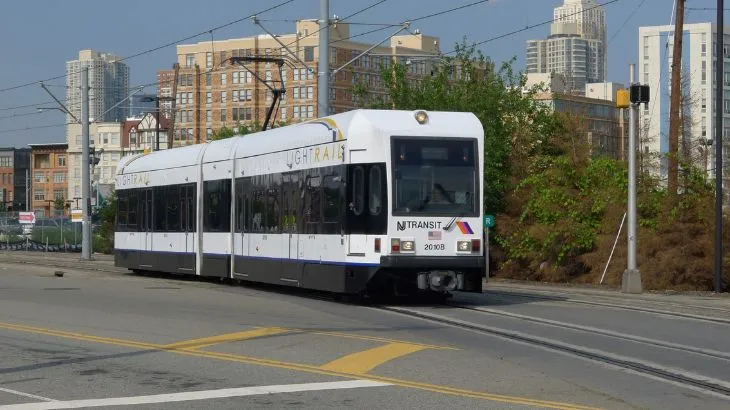
- Develop a 20-year resilience plan for New Jersey Transit's bus fleet, which is in the process of undergoing electrification (and has received FTA funding to do so).
- Develop and test a business model in Virginia by installing enroute electric vehicle chargers that provide strategic Transit Agency vehicles and the general public with reliable, affordable access to EV charging.
- Implement e-mobility hubs at three sites owned by SacRT and adjacent to light rail stations. The e-mobility hubs will not only activate the light rail stations, but will provide access to EV carshare, bike and scooter share, electric microtransit, and EV charging. This suite of clean mobility options will increase access for area residents to work, school, services, and recreation, while shifting trips away from gas-powered and single-occupancy vehicles.
- Develop a statewide resiliency plan for Hawaii state fleets and identify necessary charging infrastructure and backup energy supply needs.
- Design resilience plans for Indianapolis, Dayton, and Ames including evaluation and visualization of electrical resilience of EV Charging, guidance for grid hardening and future EV Charging placement; benefit-cost ratios of different technologies; storm preparation and restoration strategies considering EV Charging and energy justice.
- Develop frameworks, metrics, and tools to quantify the resilience of EV charging infrastructure and potential mitigation strategies for the state of Colorado. The project will create an EV charging infrastructure resiliency plan for Colorado State Agencies and their utility/commercial partners.
- Develop a regional electric vehicle infrastructure resilience (REVIR) plan to facilitate a secure, reliable, resilient, and equitable EV charging ecosystem in the four-state region of Minnesota (MN), Montana (MT), North Dakota (ND), and South Dakota (SD).
Source: DOE