Stantec to lead design for Dundas BRT Mississauga East corridor in Ontario
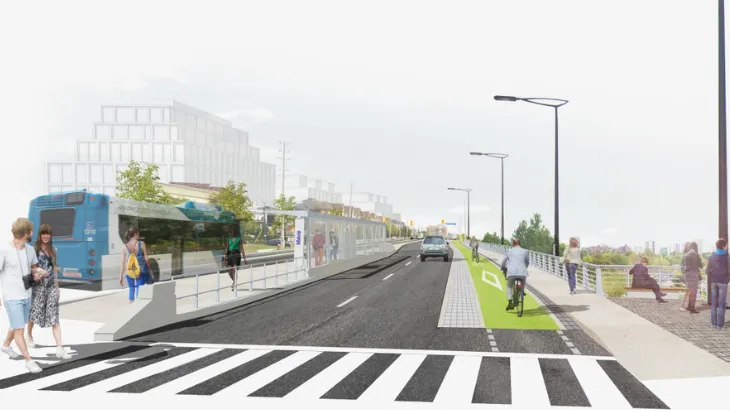 Image credit: Metrolinx
Stantec has been selected by the City of Mississauga to lead detailed design and contract administration on the Dundas Bus Rapid Transit (BRT) Mississauga East Corridor, which includes more than 7 kilometres of bus rapid transit with 8 stops.
Led by the City of Mississauga, the Dundas BRT Mississauga East segment has an estimated project budget of C$580 million, which includes design and construction, land acquisition, and additional regional utility upgrades to be coordinated to increase construction efficiency.
Stantec will provide consulting, design, tender preparation, procurement support, construction, post-construction, and maintenance period administration services. Works will also include significant utility relocation coordination, permitting, and approvals facilitation. The project will include environmentally friendly practices and materials to minimize the project’s carbon footprint.
Stantec’s Water group will work with water engineering partner CIMA+ on approximately 12,500 metres of watermain and approximately 12,600 metres of wastewater main replacement, using a combination of trenchless tunneling and open-cut techniques. These works will be closely coordinated with roadway construction to minimize community disruption while optimizing cost and schedule outcomes.
The Dundas BRT Mississauga East project is a crucial part of the larger transit expansion in the region, supporting transportation demand and Metrolinx’s 2041 Regional Transportation Plan. The project also aligns with the City of Mississauga’s 2018 Dundas Connects Master Plan, supporting urban growth while addressing environmental commitments and community interests.
The design will include dedicated median bus lanes and use Intelligent Transportation Systems (ITS) for optimized signal timings and transit priority for fast, reliable service. It will introduce new and upgraded stops equipped with improved accessibility for all passengers. Inclusive, barrier-free mobility for non-vehicular users will be included through accessible routes, tactile surfaces, and integrated public amenities.
Once complete, the corridor will feature an enhanced boulevard based on complete street principles, which will include cycle tracks and sidewalks to support all road users with safe, attractive travel options.
Source: Stantec