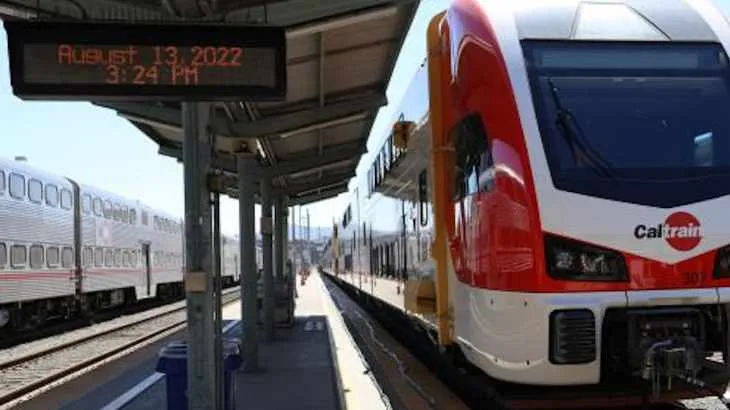
Metra proposes 2026 operating budget and capital plan, includes fare increase
 Image credit: Metra
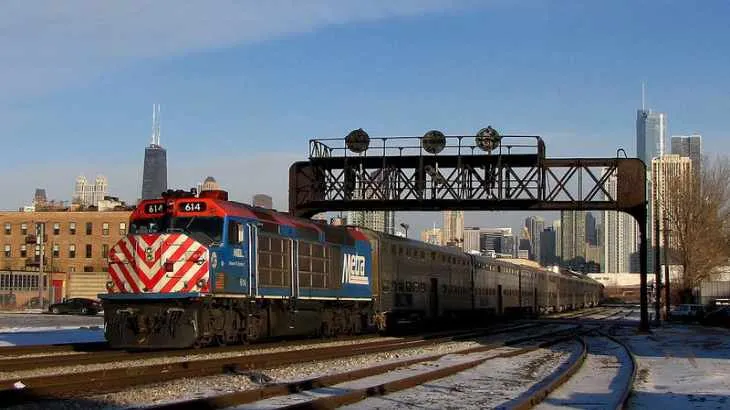
Metra unveiled a $1.1 billion budget for 2026 that includes an RTA-mandated fare increase and other measures to cover a projected $68 million shortfall, but no service cuts will be needed. It also proposed a $575.3 million capital plan that continues major investment in bridges, stations, and new and rehabilitated rolling stock.
The plans will be the subject of public feedback, including hearings, before the Metra Board of Directors votes in November.
Like CTA and Pace, Metra initially expected to be facing a larger funding shortfall next year, brought on by the expected exhaustion of federal COVID-relief funds. The agencies have been using the relief funds to cover drops in fare revenue due to lower post-pandemic ridership. But thanks to a variety of factors, Metra now expects to be able to get through most of 2026 before those relief funds are fully spent. And it expects to be able to cover the smaller shortfall with prioritized hiring, delayed discretionary spending, delayed service expansions, better operating results, and higher sales taxes.
However, Metra expects a $276.3 million shortfall in 2027 and a $304.8 million shortfall in 2028. Severe service cuts and other actions will be needed unless the Legislature acts to increase funding for public transportation in Illinois to replace the COVID-relief dollars.
The RTA required Metra, CTA, and Pace to raise fares by a minimum of 10 percent next year to help address deficits brought on by the exhaustion of federal COVID-relief funds. It would be the first across-the-board fare increase since 2018. Due to the need to round fares to the nearest quarter to assist onboard fare collection, Metra fares would increase 13% to 15% depending on the fare product and the number of zones travelled.
The proposed operating budget of $1.1 billion is about $18 million, or 1.7%, lower than the 2025 budget. The decrease is largely driven by operating efficiencies and other reductions offset by expected inflationary, contractual, and market increases.
The budget is funded by system-generated revenue of $325 million, including $207.8 million in fares. It also is funded by $635.9 million in regional sale tax receipts and Metra’s remaining $206.1 million in federal COVID-relief funding. Metra is proposing to set aside $60 million in fare revenue for capital needs, including for a critical program to replace or rehab hundreds of aging bridges.
The $575.3 capital program is funded by $426.7 million in federal formula funding and discretionary grants, $88.6 million in Illinois PAYGO funding, $100,000 in an RTA Access to Transit grant, and $60 million in Metra capital funding. The program allocates $268.2 million to rolling stock; $68.4 million to bridges, tracks and structures; $59.1 million in signals, electrical and communications; $27.3 million in facilities and equipment; $59.9 million in stations and parking; and $92.3 million in support activities.
Source: Metra