Denver RTD board proposes 2026 budget with no major service cuts, fare increases
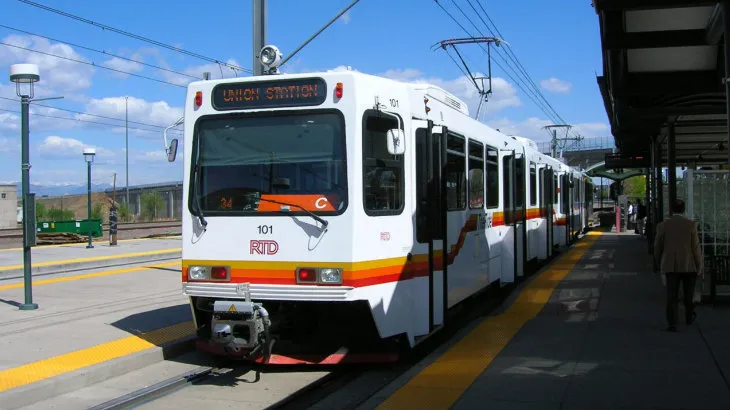 Image credit: RTD
The Denver Regional Transportation District (RTD) has published its 2026 proposed budget, amounting to $1.3 billion, including its operating expenses, state of good repair work and debt service before carryforwards. The proposed budget brings expenses in line with RTD’s Strategic Plan, limits the impacts to service, and retains the workforce the agency says is needed to meet its goals.
The proposed budget appropriations do not host any capital carryforward expenses from the 2025 budget. Not including the impact of the East Colfax Bus Rapid Transit (BRT), the revenue is expected to increase 6.4% to $1.14 million over the 2025 budget. The labor and purchased transportation expenses make up more than two-thirds of operating expenses in the proposed budget.
RTD is primarily funded via the collection of a 1% sales and use tax in the Denver metro area, making up three fourths of the 2026 expected revenue. The sales and use tax can be impacted by things like external market factors, including inflation, recessions and the availability of goods and services. The proposed budget accounts for unknowns in the financial climate.
The University of Colorado Boulder’s Business Research Division carried out third-party research to provide RTD with semi-annual sales and use tax forecast models. In 2026, this revenue is forecasted to make up 77% of expected funding before the impact of East Colfax BRT. RTD uses BRD’s medium forecast financial models to develop its annual budget and five-year financial forecast to be reviewed and adopted at the end of each year.
Funding is being pared back in 2026 for service contracts that did not meet the anticipated budget costs for 2025, resulting in $17 million in projected savings for the agency. The partnership program could also see changes resulting in $2 million savings. For 2026, the closed (legacy) pension plan contribution for salaried employees is set at $7 million in 2026 since the plan is considered adequately funded, as opposed to the $15 million budgeted for 2025. Other proposed budget reductions include the delayed hiring for 81 vacant positions, which the agency suggests will yield $7 million in savings. RTD plans to modify overtime procedure that is expected to save the agency $5 million. There is no planned force reduction for 2026, though the proposed budget does not include a cost-of-living adjustment or merit increase for non-represented employees.
The new budget also includes recommendations for $20 million in debt financing for vehicles that are used for paratransit services and FlexRide. The plan proposes a prepayment of $57 million in debt obligations for 2026 to strengthen the financial outlook. The proposed budget includes no change to the FasTracks Internal Savings Account, the balance of which is $192 million. The capital replacement fund is proposed at $166 million, though that figure is not expected to be sufficient to cover the cost of capital requirements through the end of the decade. According to fiscal policy, the operating reserve of $227 million is set to three months of operating expenses.
The board will consider taking action on the proposed budget in December following a public hearing.
Source: RTD