California extends cap-and-invest program up to 2045, funds transit and housing
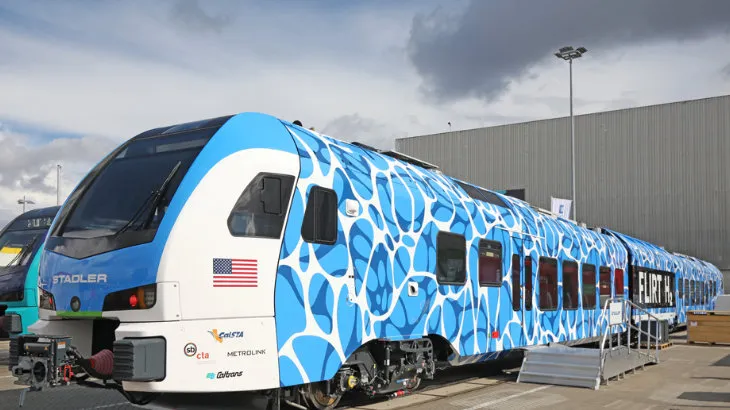 Image credit: CalSTA
California Gov. Gavin Newsom signed a package of energy and climate-related bills that will deliver many millions of dollars for Bay Area programs, including for transit and affordable housing. The legislation will guarantee $1 billion per year for high-speed rail, which is eventually supposed to make its way to The City’s Salesforce Transit Center.
Contrasting the day’s actions with President Donald Trump’s environmental record, Newsom joined members of the state Legislature and labor, business, climate and energy advocates for a signing ceremony at the California Academy of Sciences.
Two of the bills he signed into law concern the state’s cap-and-invest — formerly, cap-and-trade — program. The new Legislation will extend the program through 2045 and update it, in part by allocating the annual money the high-speed rail. Previously, the cap-and-invest program had been set to expire at the end of 2030.
The legislation marks the first time that California high-speed rail will have a stable source of funding. It’s also the largest-ever guarantee of money for the project. The infusion will give the California High Speed Rail Authority enough money to complete the project’s initial segment between Bakersfield and Merced in the Central Valley.
The state’s cap-and-invest program sets declining limits on major sources of carbon pollution. The biggest polluters, such as large factories, energy companies and oil and gas suppliers, can purchase pollution allowances at quarterly auctions, the proceeds of which fund a wide variety of programs. One aim of the program is to give polluters a monetary incentive to make their operations cleaner. California has a stated commitment of achieving net-zero carbon pollution by 2045.
Since its first appropriation in 2014, the cap-and-invest program has invested $12.8 billion in already completed projects, according to a May report from the state Air Resources Board. In 2024 alone, programs implemented nearly $1.9 billion on projects.
Source: ca.gov