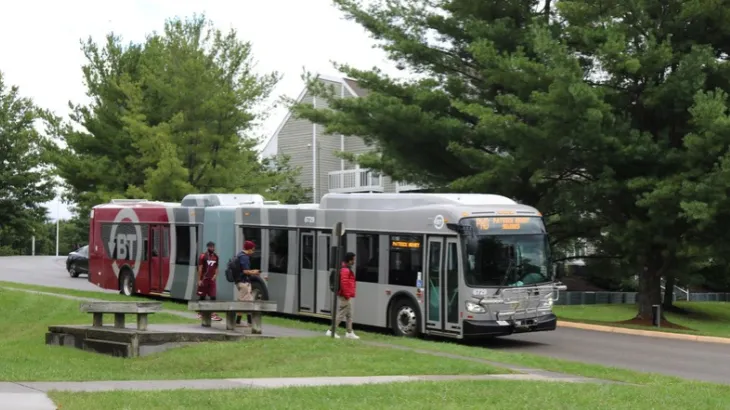
California city taps LYT AI solution to improve bus service and increase ridership
 Image credit: LYT
San Jose city officials have deployed a traffic signal system from the company LYT to shuffle public transit buses more efficiently through congested intersections. City officials have expanded the traffic signal system to all 24 bus routes across the city that leverages artificial intelligence (AI) and real-time traffic data to prioritize green light signals for public buses.
With nearly 1 million residents bustling around a city that covers 182 square miles, “a lot of San Jose residents spend either a lot of time in the car or using other methods of transportation,” said San Jose, California’s chief innovation officer and budget director, Stephen Caines. “When it comes to ways that city hall can specifically improve the lives of our residents, we really see transportation as one of those topics that uniquely touches almost every single resident in our city.”
Since the citywide expansion, the AI-enabled system has increased bus travel speeds by 20%.
Driving the enhanced public transit bus performance is a network of transponder devices in the vehicles that communicate with the city’s traffic signal system to adjust red and green lights as needed.
The expansion comes after a 2023 pilot program where the traffic signal system was deployed along two bus routes, resulting in a 50% reduction in stalling at red lights and improved on-time arrivals for buses.
City officials hope a more accurate and efficient bus system will shorten wait times for bus riders and encourage more residents to leverage public transportation options, which is associated with environmental impacts like reduced carbon emissions, healthier air quality and slowed climate change.
The traffic signal system can also provide more data for a very dense and evolving transportation ecosystem that informs transportation officials of potential tech, road conditions or personnel issues that disrupt normal bus services and arrival times. If a bus’s signal, for instance, indicates it is running behind schedule, city staff may be able to detect issues before residents report them.
Source: LYT