Miami Tri Rail evaluates proposal for flat fare to address financial challenges
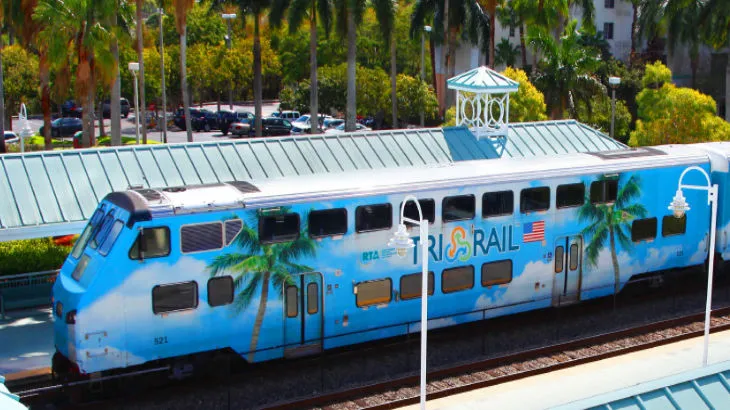 Image credit: Tri Rail
Miami’s Tri-Rail system, an essential part of the city’s public transportation network, is considering a significant change to its fare structure. The proposal for a flat $5 fare aims to address financial challenges and prevent future service disruptions. This decision is part of a broader effort to revamp Miami’s transport offerings in light of recent challenges and opportunities.
Currently, fares are calculated based on distance traveled, which has led to complexity and varied charges for passengers. The shift to a uniform fare aims to simplify the system and increase accessibility. However, this change comes on the heels of financial difficulties, as Tri-Rail faces pressure from both operational costs and decreased ridership.
According to the South Florida Regional Transportation Authority (SFRTA), this flat fare could stabilize revenue streams. Given the financial uncertainties, officials are seeking ways to maintain service levels without frequent fare hikes. The proposed change not only aims to streamline revenue collection but also to offer predictability for daily commuters.
The Tri-Rail fare adjustment is part of a larger overhaul of Miami’s public transit system. Recent reports indicate potential expansions and improvements in infrastructure, aligning with changes in urban mobility demands. Miami’s efforts are driven by a need to modernize transport services to support its growing population and vibrant economy.
For instance, the planned integration of bus and rail services aims to optimize routes and reduce congestion. These changes are crucial for maintaining efficiency and encouraging higher usage of public transit as Miami seeks to transition into a more connected urban environment. The proposed fare system can be seen as a step towards more sustainable transit operations across the region.
For regular commuters, the new Tri-Rail fare system simplifies budgeting for travel. A flat fare system eliminates the unpredictability of fluctuating costs based on travel distance. This could encourage more consistent use among middle-income riders seeking cost predictability. Moreover, the fare change may help capture new users by simplifying the fare structure, thus potentially increasing overall ridership.
However, concerns remain about affordability for segments of the population that rely heavily on public transportation. Community advocates are urging the SFRTA to consider these aspects to ensure the revamped system does not disproportionately impact low-income riders. Continuing dialogues with stakeholders are being encouraged to balance operational sustainability with rider equity.
Source: IndyGo