HRT approves System Optimization Plan, deployment to start in May 2027
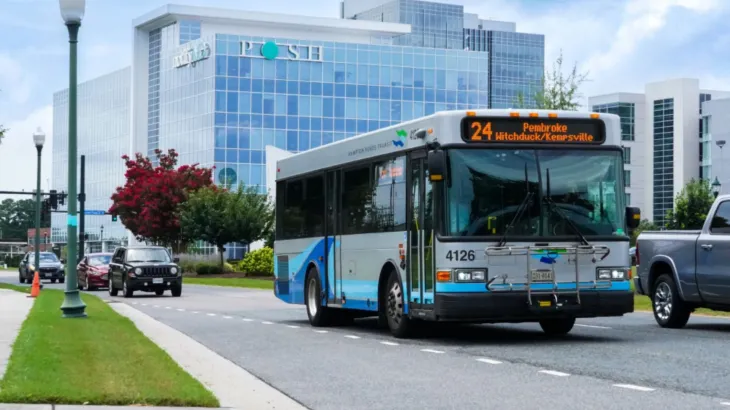 Image credit: HRT
The Transportation District Commission of Hampton Roads, the governing board of Hampton Roads Transit (HRT), approved the agency’s System Optimization Plan (SOP), a comprehensive initiative designed to better align bus service with available resources to create a more reliable transit network for customers.
The SOP aims to increase ridership by allocating service where it is most needed, improving reliability, and making the system more cost effective. The SOP proposes eliminating or modifying low-performing or duplicative routes while redeploying those assets to routes with high ridership demand. HRT also will add new zones for its OnDemand Ridesharing service, providing wait times of 15 minutes in areas with reduced fixed-route service.
“Today’s board approval marks a critical milestone for HRT as we proactively build a more efficient bus network for the future—one that preserves customer access and mobility while better aligning service schedules with operator and vehicle availability,” said Karen Kitsis, HRT’s Chief Planning and Development Officer.
One benefit of the plan is to increase the number of regional backbone routes from three to 13, providing 330,000 more people with access to 15-minute service during peak hours. Fewer than 1 percent of current customers will lose access to transit under the plan.
The SOP will be implemented in phases starting in May 2027. Changes will affect local bus routes in HRT’s member cities of Chesapeake, Hampton, Newport News, Norfolk, Portsmouth and Virginia Beach.
HRT’s mission is to connect Hampton Roads with transportation solutions that are reliable, safe, efficient and sustainable. For more information on transit services, visit gohrt.com. The SOP explores how HRT can put its limited resources to their best use by reducing low-ridership local bus service and redeploying those savings in routes with high ridership demand.
HRT wants to right-size the local bus network to match the human and financial resources needed to run a dependable and cost-effective bus operation:
- Bus operator shortages make it difficult to return service to pre-pandemic levels and introduce additional service. By matching its service to its resources and right-sizing the network, HRT will become a more reliable travel option for customers.
- OnDemand Rideshare gives HRT a flexible, convenient way to serve low-ridership markets and routes. This microtransit service helps fill gaps in the network where fixed-route bus service isn’t supported by demand.
- To deliver planned 15-minute peak service on 757 Express routes, HRT must reallocate resources; without doing so, full implementation could be delayed by another decade.
The SOP includes evaluating low‑ridership routes and reinvesting service hours into high‑demand corridors to improve efficiency and system performance. The result will be a right‑sized local bus network that aligns scheduled service with actual operational capacity, reducing missed trips and improving day‑to‑day reliability.
Source: HRT