Consolidated Appropriations Act of 2026 becomes law, funds transit through Sept. 30
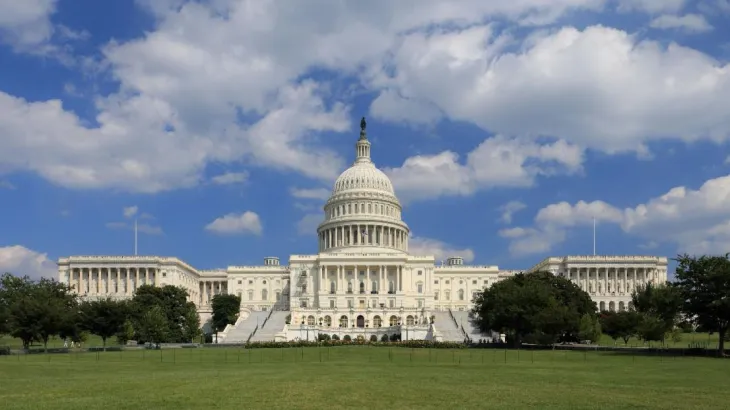 Image credit: USDOT
The Consolidated Appropriations Act of 2026, which included the Transportation, Housing and Urban Development, and Related Agencies Appropriations Act, 2026 (THUD Act), was signed into law by President Donald Trump on Feb. 3. Passed by both chambers of Congress last month, the THUD Act provides $21.1 billion for public transit for fiscal year (FY) 2026—an increase of over $160 million from FY 25—as well as $15.9 billion for passenger and freight rail—a decrease of just shy of $300 million from FY 25.
The package funds Federal Transit Administration (FTA) transit formula grants to the tune of $14.6 billion for FY 26 from the Mass Transit account of the Highway Trust Fund that will be available until its expended. This funding covers essentially all major formula programs that fall within the purview of transit. The package does not, however, give any new contract authority.
Greenlit in the package was $1.7 billion in funding for the Capital Investment Grants (CIG), providing over $1.3 billion for New Starts and Core Capacities, while still allocating $200 million for Small Starts, over $25 million for project delivery and engineering support and $100 million for FAST Act pilot projects. Congress has locked the funding to a specific allocation table, not allowing the U.S. Department of Transportation (USDOT) to adjust funds more than 10% into differing categories and forcing it to deliver funds within 120 days of the package being signed into law—June 3, 2026.
A little over $200 million was also appropriated from the general fund for transit infrastructure grants—things like ferry grants, bus testing facilities and the Accelerating Innovative Mobility Initiative grants, along with a host of other earmarks. The appropriations package also updated rules for how money is controlled and can be disbursed. Like with National Infrastructure Investment discretionary grant funding, the $145 million in funding is seated with USDOT and the new package outlines how the department must dole out funds. This includes:
- What the funds can be spent on such as capital projects, multimodal projects that include transit or for the planning, preparation or design of future transit investment.
- Removing minimum or maximum grant size rules, including imposing no minimum cap on planning projects.
- Adding a 5% or greater rule for funding to go to disadvantaged communities and capping the funding split to 50% for rural and urban projects.
- Imposing a priority status to projects that require a contribution of federal funds to complete its funding package.
- How the FTA must administer the funds once they’re released to it.
The obligation limits do not apply to old money, meaning it won’t expire due to sunsetting caps. Further, it may roll old funds forward under the new package, allowing for administrative simplification. It also deprecates old rules, like no longer being allowed to slow or block CIG projects because the federal share exceeds 40%, or because the revenue would not be made up in the Highway Trust Fund.
The Act also delivers additional funding to support transit for major events, including just over $100 million for host cities of the 2026 FIFA World Cup and just over $94 million to support transit for the 2028 Summer Olympic and Paralympic games in Los Angeles. Funding for the World Cup will be issued based on formulas accounting for stadium capacity and match count and can be used for operational expenses.
Funding for the 2028 Olympics is coming at a share of 80% federal funding and 20% local funding, except for supplemental bus support, where federal funding will account for 90% of available funds. Los Angeles County Metropolitan Transportation Authority (L.A. Metro) notes that funds will allow it to keep working on its Games Enhanced Transit System (GETS), including in service planning, land leasing costs, designs for temporary facilities, station improvements, mobility hubs and light rail improvements.
The appropriations act also funded smaller, regional projects, like GoTriangle, which received $2 million in Community Project Funding in part for a new Triangle Mobility Hub (TMH). Down south, the Pinellas Suncoast Transit Authority (PSTA) received two streams of funding as part of the package to support and expand ferry services in the region.
To pass the legislation, Congress separated out funding for the Department of Homeland Security from the Consolidated Appropriations Act of 2026, re-passing the Senate-amended version on Feb. 3 before it was signed into law by the president on the same day.
While the act covers yearly transportation appropriations, the country is also approaching another transit funding deadline, the expiration of the Infrastructure Investment and Jobs Act (IIJA) in September, the multi-year surface transportation reauthorization bill. The new bill is in the works with hearings being held in both the House Transportation and Infrastructure and Senate Environment and Public Works committees.
Source: USDOT