TransLink releases Climate Action Plan, prioritizes climate resilience
 Image credit: TransLink
TransLink has released a Climate Action Plan outlining describing actions it will take over next three years to address the climate emergency and meet ambitious climate targets for the transit system.
Over the past two years, extreme weather in the form of deadly heat waves, intense rain, and flooding have had an enormous impact. The Climate Action Plan will prioritize climate resilience and accelerate progress towards a carbon neutral region by 2050.
Highlights include:
- Developing a Net-Zero Facilities Strategy by 2024 and evaluating new technologies such as heat pumps, renewable fuels, passive design, wood construction and solar;
- Expanding the compressed natural gas bus fleet to 383 and moving to renewable natural gas by 2024;
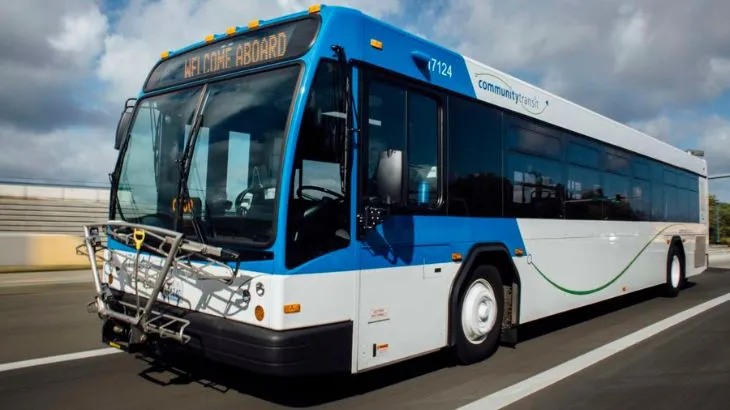
- Expanding the battery-electric bus fleet from four to 155 (136 new vehicles) by late 2025;
- Designing and constructing the new Marpole Transit Centre by 2027 to serve 350 battery-electric buses;
- Replacing more than one-third of our diesel fleet with 462 battery-electric buses;
- Renovating the Hamilton, Port Coquitlam, and Burnaby transit centres to charge and store battery-electric buses;
- Developing a cooling and tree canopy program at transit passenger facilities by 2023;
- Protecting the transit system from climate impacts, including revising design and building of transit passenger facilities; and
- Evolving the climate plan to integrate Scope 1, 2, and 3 emissions and leveraging supply chain to achieve regional social and environmental sustainability goals.
The Climate Action Plan builds on the Climate Action Strategy, which was first adopted in January 2022. The strategy set a goal to become a climate-resilient and net-zero greenhouse gas (GHG) transit system by 2050, with a 45 per cent GHG reduction by 2030 relative to 2010 levels. The plan supports Transport 2050 and efforts to decarbonize regional transportation — the largest source of GHGs in the region.
TransLink will evaluate climate risks and take steps to transform operations, assets, and passenger facilities to become more climate resilient.
Source: TransLink