NJ Transit invites bids to advance construction for Raritan Bridge Replacement
 Image credit: NJT
New Jersey Transit (NJ Transit) has issued an Invitation for Bid (IFB) for the second Construction Contract GC.02 of the Raritan River Bridge Replacement Project, which involves replacement of the 112-year-old bridge damaged by Superstorm Sandy in 2012.
Electronic bids will be received until March 24, 2022. Only firms who have previously submitted an approved special prequalification and have met the special qualifications requirements may submit a bid.
The work under GC.02 consists of Lift Bridge and Flanking Spans Superstructure, Communications, Signal and Overhead Catenary Work. The contract includes all systems required for the movable span testing and operation; the erection of the four main span monopoles designed, fabricated and tested in GC.01; miscellaneous civil and structural work; wetland mitigation; and demolition of the existing bridge to construct the bridge fender system and provide a fully functioning navigational channel beneath the newly constructed bridge.
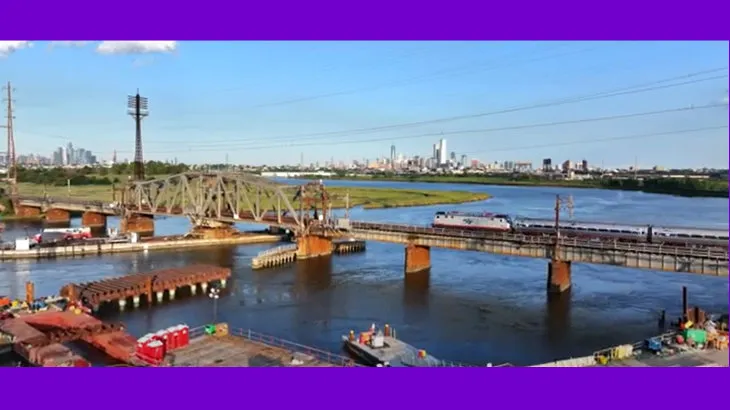
The current Raritan River Bridge, colloquially known as River Draw, is a moveable, swing-span bridge that spans 2,920 feet across the Raritan River between Perth Amboy and South Amboy. Built in 1908, it is the sole rail link for 17 of the 20 stations on the NJ Coast Line between popular recreation destinations along the Jersey Shore and major employment centres of Newark, Jersey City, and Manhattan.
While several repair and rehabilitation contracts to keep the bridge in service have been executed, the movable span has frequent operational issues and excessive maintenance costs continue to escalate. In addition, the bridge is subject to frequent marine vessel collisions due to the poor channel geometry at its swing span.
The new two-track vertical lift bridge would provide a more resilient structure with additional vertical clearance above the 100-year flood elevation. The western alignment would place the bridge farther away from the ocean to improve flood resilience and increase train speed. The new mechanical and electrical systems would increase movable span operation reliability and reduce maintenance costs. In addition, improved navigation channel geometry at the lift span will reduce the risk of vessel collision with the pier protection systems, and the associated costly repairs.
Source: NJT