Risk and Resiliency in Transit
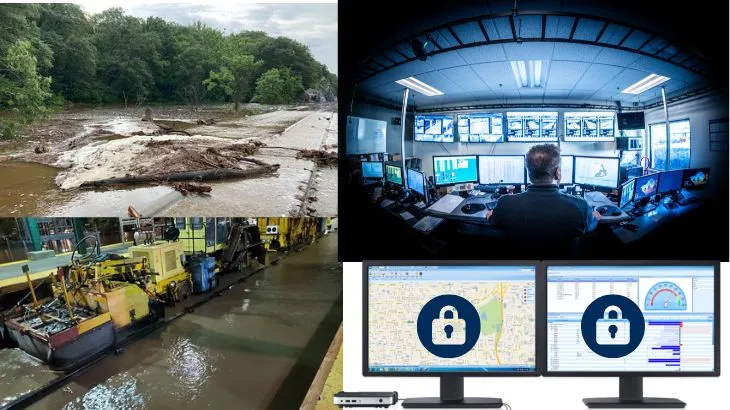 Image credit: TAM America
Transportation systems are vulnerable to natural and anthropogenic disasters such as extreme weather, climate change, and cyberattacks. Transit systems are also inherently vulnerable to physical attacks (such as improvised explosive devices, active shooters, and chemical or biological attacks) due in part to factors such as high ridership, open access points, limited exit lanes, and fixed, publicly available schedules.
These events can result in unanticipated disruptions and constraints on existing infrastructure. For example, heavy rains and thunderstorms of the level of a 1,000-year event overwhelmed New York’s Hudson Valley and Vermont in July. The rail tracks suffered significant damage from washouts and landslides causing disruption in rail service for several days. Crews had to work round the clock for days to clear the tracks and restore train service.
Risk
The US Department of Homeland Security (DHS) defines risk as a function of three elements: threat, vulnerability, and consequence. Threat is an indication of the likelihood that a specific type of attack will be initiated against a specific target or class of targets. Vulnerability is the probability that a particular attempted attack will succeed against a particular target or class of targets. Consequence is the effect of a successful attack.
DHS outlined its risk management framework for critical infrastructure protection, including the transportation systems sector, in the National Infrastructure Protection Plan and the DHS Risk Management Fundamentals.
Resilience
Resilience is the ability to anticipate, prepare for, and adapt to changing conditions and withstand, respond to, and recover rapidly from disruptions. It is critical to design new and modify existing transit systems to be resilient.
Resilience has become an important factor to consider at all stages of the planning process. Following are some of the ways that transportation agencies integrate resilience into planning:
- Measuring and monitoring the performance measures mandated by MAP-21 and the FAST Act.
- Conducting vulnerability assessments for assets that may be impacted by climate change.
- Performing economic analysis to compare adaptation options.
- Revising design guidance based on threat projections.
Focus on Cybersecurity
Transit systems rely on technology and internet-connected devices to manage business functions, such as websites or communications. This increases their risks from a cyberattack. Transit agencies also increasingly rely on networked systems for tracking, signals, and operations of equipment and services, such as computer-based systems that control signaling and train speed. Cyberattacks have the potential to significantly affect both business information systems and operational control systems.
In February 2023, Washington Metropolitan Area Transit Authority Office of the Inspector General (WMATA OIG) concluded that the agency's cyber weaknesses and vulnerabilities “are a cause of grave concern,” and that the transit agency’s data, networks and physical assets are at “unacceptable risk of malicious penetration and compromise.” For its part, WMATA said that it has made “measurable improvements” in its cybersecurity program.
TSA periodically assesses vulnerabilities of public transportation systems through the Baseline Assessment for Security Enhancement (BASE) program. BASE is a voluntary program in which TSA evaluates the security programs of transportation entities, such as public transit agencies, offers technical assistance, and shares best practices. TSA Surface Transportation Security Inspectors assess and score transit agencies’ security programs against a checklist of security fundamentals and provide a detailed report and recommendations.
The Office of Intelligence and Analysis maintains the cyber threats data, which officials calculate at the urban area level. The data incorporate multiple sources of information on attempted, suspected, and confirmed cyber intrusions, data exfiltration, and disruptive cyberattacks targeting critical infrastructure.
Steps to incorporate resilience in planning
In the July 2022 NCHRP Research Report 1052: Integrating Resilience Concepts and Strategies into Transportation Planning: A Guide, the following steps have been recommended to incorporate resilience in planning.
Step 1: Create a Working Group - identification of champions and key staff from different areas of the agency involved in transportation planning to create a working group. The working group will lead the process of incorporating resilience concepts and strategies into agency culture and activities, specifically into transportation planning.
Step 2: Develop an Understanding of Resilience - adoption or development of training material by agency champions and the working group to provide knowledge and understanding of resilience to planning staff. Training material used by peer agencies could also be adopted.
Step 3: Assess Current Practice - assessing the agency’s capability maturity to measure the degree of formality and the optimization of processes for an organization, from ad hoc practices to formally defined and followed processes.
Step 4: Develop a Resilience Action Plan - identify areas where improvements can be made and develop an action plan.
Step 5: Adopt and Implement - identify key components and resources to support implementation including people, resources, structure, systems, and culture. These components should be in place to move the action plan into practice. In addition, it is critical to specifically outline the necessary tasks that should be completed within the action plan and to create some type of accountability (e.g., through performance measures) to ensure progress is made.
Step 6: Evaluate and Optimize - continuously evaluate and optimize the resilience action plan. As part of the monitoring process, it is important to evaluate if each strategy from the action plan has been implemented and if the expected outcome has been achieved. The action plan should be updated based on successes and setbacks.
Risk and Resilience (RnR) Assessments
RnR Assessments are a key building block for incorporating resilience into transportation planning. Agencies conduct RnR assessments using different approaches and at different levels, with some employing the analysis at a project level but not necessarily in detailed planning. The outputs of the analysis can facilitate prioritization activities to be identified.
To perform RnR analyses it is necessary to understand asset and corridor vulnerabilities and to consider criticality in the face of relevant hazards and threats. Agencies may perform qualitative assessments, quantitative assessments, or some combination of the two depending on the objective of the analysis, the scale considered, and the available information.
Qualitative methods are typically more suited to the assessment of a network or system rather than the assessment of individual elements. They can be employed to provide general information, identify high-level results, and facilitate comparative analysis. Quantitative tools provide an objective measure such that infrastructure components or networks may be analyzed in greater detail.
Key to both methodologies is the definition of appropriate thresholds against which the outputs of the analysis may be compared. In this way, a range of actions and interventions can be considered and prioritized from alternative perspectives (e.g., benefit-cost analysis). A significant benefit of quantitative assessments is the ability to rank alternative strategies in an objective sense.
Conclusion
Transit agencies have a long way to go in incorporating resilience in planning. They also need processes, systems and tools to measure and assess resilience of critical assets. Finally, dedicated funding is needed to implement and sustain resiliency efforts over long term within the organization.